





Sweaters and shirts: how to care for them to prolong their lifespan?
A fan of fine fabrics? Discover our tips for washing your wool sweaters and caring for your shirts gently, season after season.
Over the years, white shirts lose their brightness, while knitted sweaters can lose their shape or softness over time. But it's not inevitable!
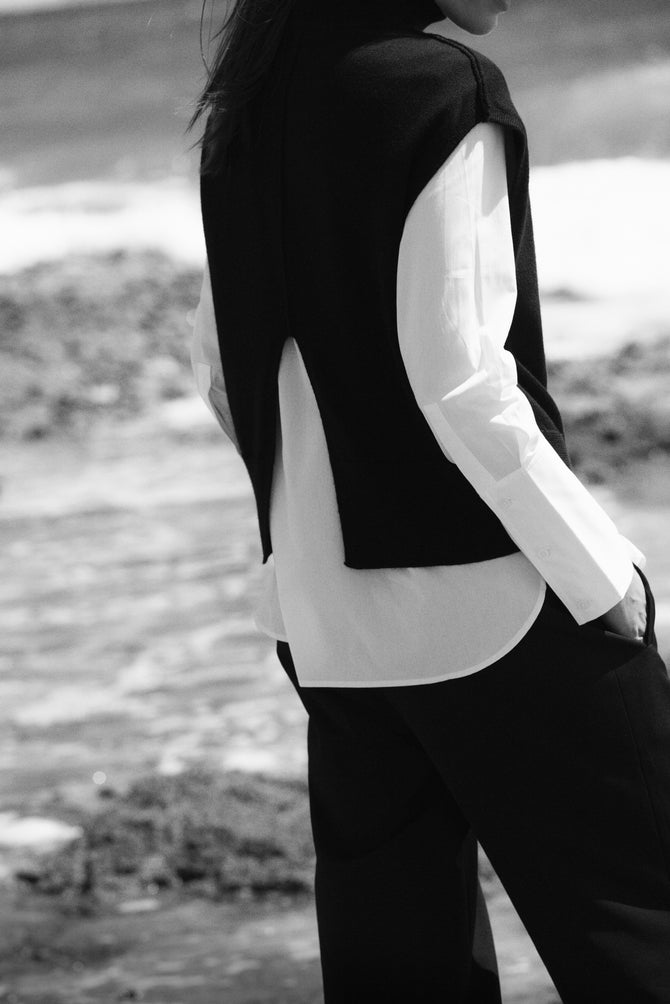
Proper washing, gentle drying, careful ironing and proper storage help to preserve the appearance and beauty of each piece, from cotton to silk, from the finest wool to the most fluid materials.

Shop the look
How to wash wool sweaters?
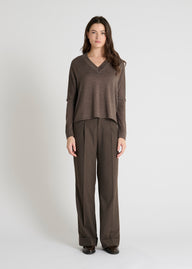
As with every winter, knitwear is proving to be an essential wardrobe staple. Knitted in baby alpaca or merino wool, these luxurious and delicate materials offer softness and warmth, becoming seasonal allies that can be worn without restraint. To maintain their shape and beauty, they require careful and appropriate care.
Discover our tips for maintaining your knitwear over time.

Shop the look
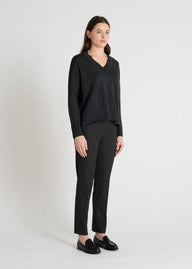

How to care for Merino wool knitwear?
Fine, light, and delicate, merino wool is a living material that reacts to temperature variations, twisting, and heat. Yarn that is overworked will become deformed, felted, or shrink. A gentle touch is therefore essential to preserve the shape and suppleness of the knit.
Washing
Merino wool should be machine washed at a low temperature, 20 or 30 degrees Celsius maximum, ideally in a mesh laundry bag. This gentle temperature prevents damage and shrinkage of the yarn. Spin drying and fabric softener should be avoided: they twist the fibers and can cause irreversible felting, similar to boiled wool.
Drying
A merino wool sweater should never be hung up. The weight of the water stretches the knit and leaves marks on the shoulders. It should always be dried flat, away from any heat source, as wool prefers cold to high temperatures.
Ironing
Gentle ironing is highly recommended to soften the knit after washing and help it regain its original shape. Done at a low temperature, it relaxes the yarn without damaging it.
Hana San's tip: Place a slightly damp cloth between the iron and the fabric: the steam softens the fiber while protecting it from direct heat!

How do I wash baby alpaca knitwear?
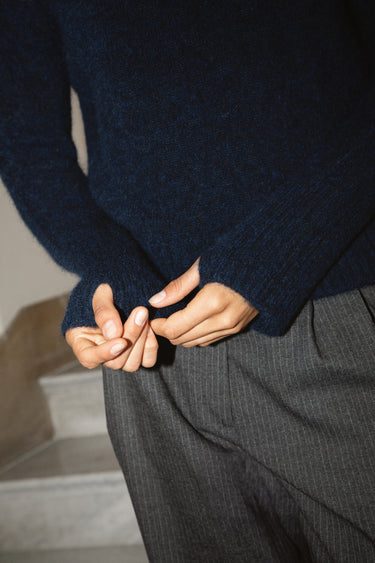
Round, airy, and incomparably soft, alpaca wool is a noble and luxurious material. Its fiber, even more sensitive than merino, reacts immediately to heat and pressure, requiring very special care.
Washing
Alpaca knitwear should only be washed in cold water. Even the slightest heat can shrink the fibers and alter the yarn's roundness. A very gentle cycle, with minimal agitation and no spin, will help preserve the knit's natural loft.
Drying
As with merino wool, alpaca sweaters should always be dried flat. Hanging them up would irreparably distort their structure and cause the knit to lose its shape.
The press
When the knitwear is particularly delicate, dry cleaning is an excellent option. Dry cleaning uses very little water and pressure, which is perfectly gentle on the alpaca fiber.
Hana San's tip: A few drops of lavender essence in the washing machine, wardrobe or when ironing naturally protects the fabric from moths, and therefore from small holes, while leaving a delicate scent on the fibers.
The shirt, a timeless wardrobe staple: how to care for it?
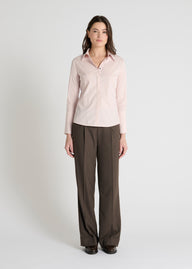
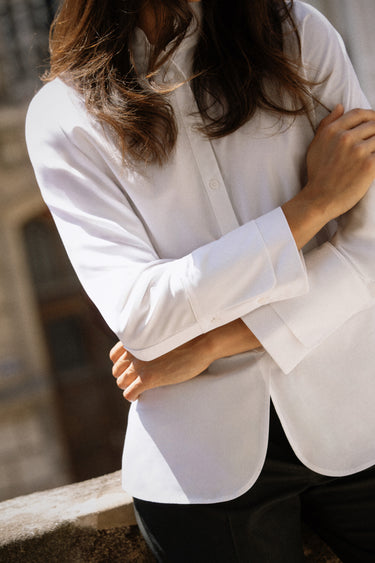
Buttoned, open, tucked under a sweater or worn on its own, the shirt transcends seasons without losing its luster, provided you know how to care for it! In cotton, linen or silk, it lives to the rhythm of daily life and deserves care adapted to its material.
Discover Hana San's tips for taking care of your shirts!


Shop the look

Shop the look
Cotton poplin, washed linen, or silk satin… Each shirt tells a story of fabric, drape, and the way it flatters the figure. Lightweight, breathable, and comfortable to wear, they accompany everyday life and gracefully transition through the seasons.
To preserve their appearance, a gentle wash at a low temperature is essential, preferably inside out, in order to protect the fiber and the fabric's shape.
Cotton, prized for its structure and freshness, washes easily on a delicate cycle and retains its crispness when ironed while still slightly damp.
Linen likes cold water and ironing which allows it to regain its natural drape.
Silk satin, being more delicate, requires special care: dry cleaning helps preserve its shine, drape and weave, while machine washing can alter its appearance.
For all materials, tumble drying should be avoided: it weakens the fibers and alters the cut!
Air drying followed by steam ironing is all it takes to restore each shirt's crispness and freshness. Simple steps to ensure these timeless pieces continue to complement every style, season after season.