


Eva Gaillot: sun-kissed cuisine, a blend of substance, seasonality, and emotion
Between Provence, the southern light, and Mediterranean rituals, Eva Gaillot envisions a cuisine deeply connected to life.
An independent chef, author, stylist, and culinary photographer, she works with seasons, ingredients, and emotions, in a constant quest for accuracy and simplicity. With La Table au Soleil, she creates intimate gatherings where cooking becomes a space for sharing and connection.
Her perspective, shaped by Ayurveda, her travels in India, but also by fashion, art, and architecture, extends far beyond the plate. In this exchange, she describes an instinctive approach to creation, where every detail matters and sincerity remains the guiding principle.
How would you describe your world today and how you inhabit the kitchen?
Today, my world is very instinctive, deeply rooted in life.
For me, cooking has become a language, almost a way of inhabiting the world. I don't see it merely as a profession or a technical gesture, but as a way of feeling, connecting, and telling something simple and true.
You are a freelance chef, author, stylist, and culinary photographer. How do these different practices interact in your work?
They are not separate; everything stems from the same sensibility. Cooking feeds the image, the image feeds the writing, and vice-versa. I think in terms of textures, light, and emotions. Whether I'm cooking, photographing, or setting a table, I always seek the same thing: a form of accuracy and balance.
Your cuisine seems deeply connected to the sun, the seasons, and living things. How do these elements accompany your creative process?
I couldn't create without them, and it's very deeply linked to my roots, my environment, the place where I grew up. The sun, the seasons, the rhythm of life give me a framework, but also a form of freedom.
It requires attentiveness, constantly adapting to what nature offers at the right time. I like the idea that not everything is entirely controllable. It removes something too rigid from creation and makes it more instinctive, more honest.
You often speak of bringing people together, nourishing, sharing. What role does the table play in your work today?
The table is central; for me, it's a space for expression and connection. It's not just about what's on the plate; it's also about what happens around it. I want to create moments where people feel good, where something authentic and
sincere circulates.

You developed La Table au Soleil. What did you want to express through this project? How did this idea come about?
La Table Au Soleil was born from a very personal desire: to get back to basics. A table, a meal, a presence. I realized that my happiest moments were spent around a table, bathed in that southern light. More than a concept, it's almost a quest, a way of life: something free, warm, lively…
An ephemeral table, conceived as unique, intimate & sunny encounters. A table rooted in Mediterranean culinary rituals.

Your work places great emphasis on materials, textures, and colors. How do you construct a culinary composition?
I often start with a sensation. A color, a season, an ingredient.
Then I build around it, looking for a balance between textures, contrasts, and taste balance. I like it when it remains lively, sincere, not perfect.
Provence is very present in your world. How does this region influence your perspective and your way of working?
Provence is my entire childhood. The light, the produce, the landscapes...
It has deeply influenced my perspective, my sensitivity, and my way of working. Here, we pay certain attention to simple things: seasonality, just taste, raw materials, moments shared around a table.
Your journey is also nourished by Ayurveda and your travels in India. How do these influences continue to guide your cooking today?
My travels in India and Ayurveda taught me to listen to my body, the rhythm of the seasons, the needs that evolve over time.
It's not something I apply strictly, but it's a framework that guides me. And in my profession as a private chef, especially for yoga retreats, it helps me to think of cooking as something that supports, that balances.
Your work is part of a world very sensitive to material and living things. Do other creative disciplines nourish your perspective?
Yes, immensely, fashion, contemporary art, architecture... everything that works with material and form inspires me. I pay a lot of attention to lines, volumes, and unexpected combinations.
If you had to draw a link between your work in the kitchen and clothing, what would it be?
For me, it's about feeling. A dish, like a garment, must be felt. It has to fall just right, without apparent effort.
Cooking, like creating a garment, is part of a seasonal rhythm. Is this a significant temporality in your creative process?
Yes, it's essential. Working with the seasons gives meaning. It provides a form of guidance and makes each moment, each dish, a little unique.
As a food stylist and photographer, you also work on staging. What role does visual composition play in your practice?
It's important, but it should never take over. The image must remain in service of something real. I always try to maintain a form of simplicity, of naturalness.
Do you see correspondences between the way a table is composed and the way a silhouette or a collection is built?
Yes, completely. It's a matter of balance, rhythm, details. Knowing when to add, when to remove.
For you, what makes a creative universe coherent, whether it's expressed through a table, an image, or a collection?
Sincerity. When everything comes from the heart, from a true passion, it naturally shines through. There's no need to over-explain.
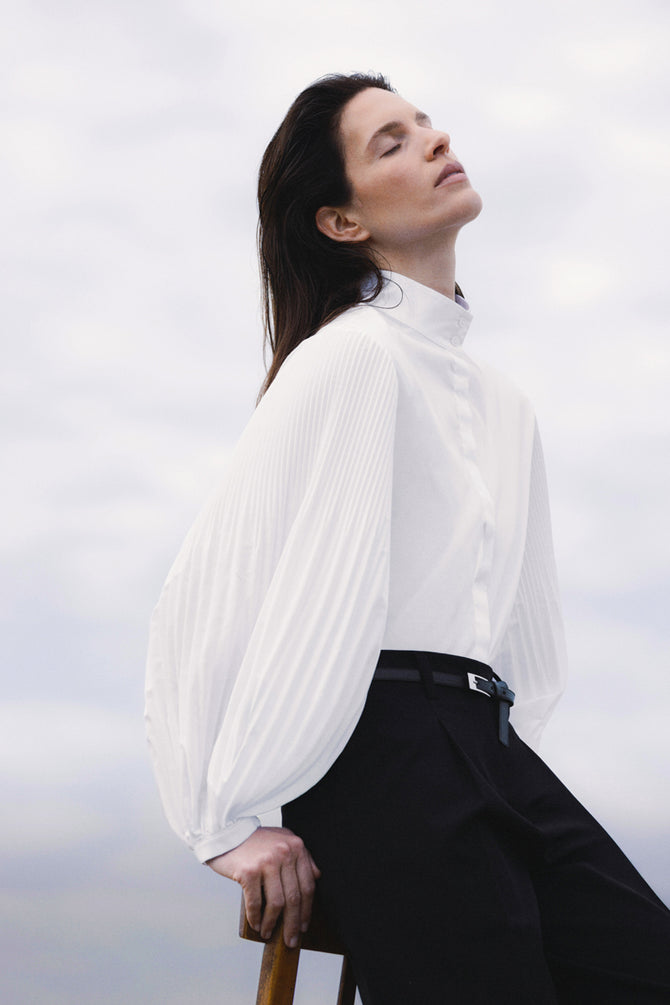
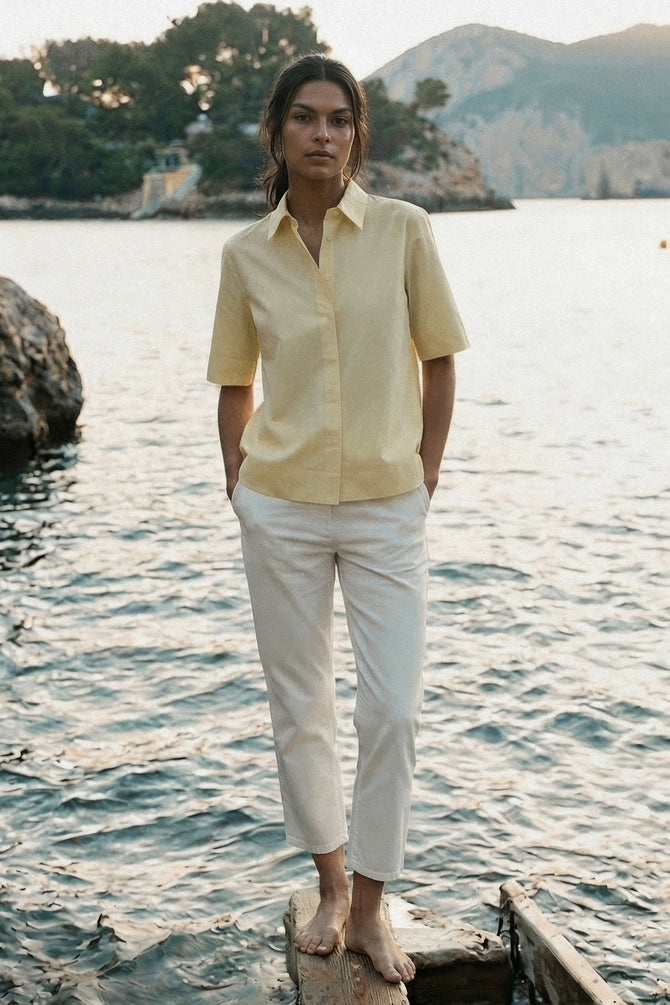
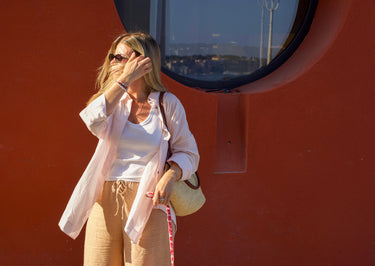
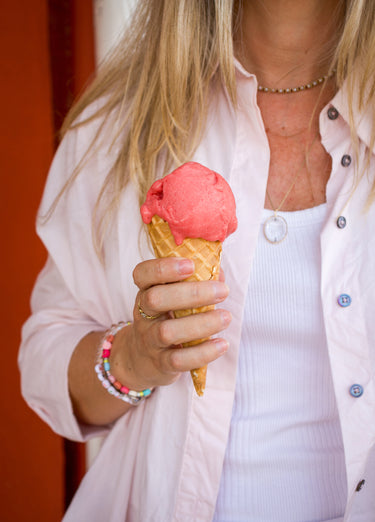
If your culinary world were to be translated into a clothing collection, what would it look like?
Color palette, materials, atmosphere… It would be a very sunny collection, with natural materials, linen, cotton, perhaps a little silk. Warm colors, off-whites, and some more vibrant touches as well. Something fluid, free, that moves with the body.
