


Franca Atelier: when two women shape the earth and their freedom
To mark International Women's Day, Hana San celebrates those who create, undertake, and shape their world with sensitivity and independence. In Marseille, France and Caroline founded Franca Atelier, a ceramic duo whose work is deeply rooted in the material and a free approach to creation.
For seven years, they have been shaping the earth to give birth to pieces that are at once raw, sensitive and profoundly alive. Their artisanal practice is based on gesture, intuition and a unique complementarity: two different personalities that converse through the material.
In this interview, they discuss their relationship with the land, their way of doing business independently, and how their duo fosters a creative universe that is instantly recognizable.
What is Franca Atelier in a few words?
Franca is a ceramic brand based in Marseille; it is the name of a girl from the south which is a blend of our two names, France and Caroline, but also a blend of our two personalities which allowed the creation of our workshop 7 years ago.
You define yourselves as “free ceramists”. What does that mean to you, and how is this freedom reflected in your way of doing business?
The concept of freedom is primarily linked to our operating method, which is free from commercial ties. We mainly produce on commission for individuals and professionals (architects, chefs, restaurateurs, brands, etc.), and above all, we have very few retail outlets—this has been a deliberate choice from the beginning. We sell 90% of our production directly, without intermediaries.
Your work is deeply connected to matter.
It is impossible to do otherwise, everything starts with a raw lump of clay, earthenware or stoneware depending on the projects, then the work of our hands, we produce most of our pieces using slabs and modeling.
What does the earth represent for you in your creative process?
The earth, through its colour or texture, is what stands out most in our productions; natural colours, white, ochre, terracotta, plain or mixed, are the essence of our universe, apart from frescoes and decorative plates for which we use coloured oxides or enamels.


Photo @nils_haagensen_ @maisonsdominos
The mixed-earth technique is central to your practice. What does it allow you to explore, to tell, to express?
The technique of mixing earths is in all cases (Nériage, Nerikomi in Japan, the jasper on Apt…) a random way of creating, they can be rectilinear, ordered or scrambled depending on how we arrange them but our mood can be an important element, as they say "there are good days and bad days, in the end it is always the earth that wins".
Your pieces play with nuances, layering, and contrasts. How do your choices of colors and earth combinations come about?
When creating custom pieces, our choices are the result of a dialogue with the client(s), a more guided "mix" depending on the desired outcome. However, we can also give free rein to our inspiration or even chance if the piece is less functional, more "artistic." We are limited by the nuances of color, so we make sure to choose natural clays, quite simply.
What do you like most about your job as a ceramicist?
We don't have the same tastes because we're two different people. France has a more whimsical temperament and focuses more on murals and decorative objects. Caroline handles the creation of decorative objects (wall sconces, lamps, stools, vases, candlesticks, etc.) or functional items (plates, dishes, etc., produced in series for restaurants), which require more precision and time. Given this, we both try to enjoy ourselves while remaining productive enough to make it sustainable. The "image" aspect of our partnership is built together, and this rapport and complementarity allow us to grow and thrive together.
But above all, what is most fascinating about clay and glazes is that they are masters of the final result; every kiln opening is a surprise!
Your world is very recognizable. How did you build this identity over time?
By trying precisely to let our opposing and complementary character traits flourish, which is not easy every day, most ceramists are solitary; there are some houses, workshops run by couples or families, but this is quite rare.
Being craftswomen also means being entrepreneurs. What have been the main challenges since the creation of Franca Atelier?
Remaining independent, free from the constraints of loans or imposed commissions, we try to work with people we "like" who share our sensibilities. Whenever possible, we try to self-produce events and exhibitions of our work outside our own space, in collaboration with venues or brands. And above all, to remain creative, not just free ☺️
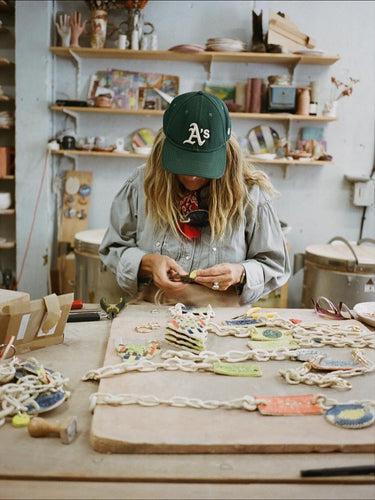
Photo by @nils_haagensen_ @maisonsdominos
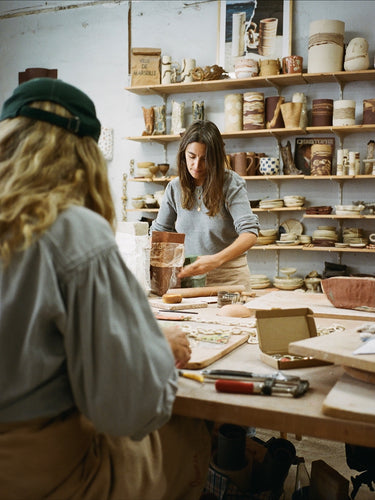
Photo @nils_haagensen_ @maisonsdominos
Creating together implies a constant dialogue.
How does this relationship nourish your work and your creative world?
This is undoubtedly the most complex part, like in a relationship, where nothing is guaranteed. There are easier moments when the project motivates us both, but sometimes we have to delegate and trust each other if we can't produce it together. In any case, we're never far from each other, and our feedback and criticism are always constructive and constructive. We work opposite each other in the studio and don't hesitate to encourage or comment on each other's work.
You are based in Marseille.
Does the city, its energy, its light, or its environment influence your work?
Obviously, Marseille is a vibrant city; the seasons and the city's dynamism set the rhythm of the year. Right now, it's cold and damp, the pieces take much longer to dry, and the city slows down a bit. We're usually more dynamic from March onwards, and weighed down by the heat in August. Then things pick up again in September, reaching their peak in December with the Christmas holidays and our only event at the workshop in mid-December, when production is at its highest.
Your work is rooted in a creative and artistic world. Do other fields (fashion, design, art, architecture…) fuel your inspiration?
Our friendship was born from this shared passion for all these areas, plus parties and music. We went out a lot together; festivals, fashion, design, and music punctuated our outings. Another strong point that shapes our creative world is our Corsican heritage, our temperaments, and our love for our island and culture.
Has your practice evolved over time? Are there things you did at the beginning that you approach differently today in your ceramic work?
Yes, of course we've evolved. Caroline has acquired a more precise and efficient technique, and she tries to be less obsessed with perfection; she appreciates "flaws," the accidents that can lead to exceptional things. And France tries to...
concentrate a little more, take notes and reproduce the same thing twice.

Photo @stephaneminnesota, Set design @lisedoreau
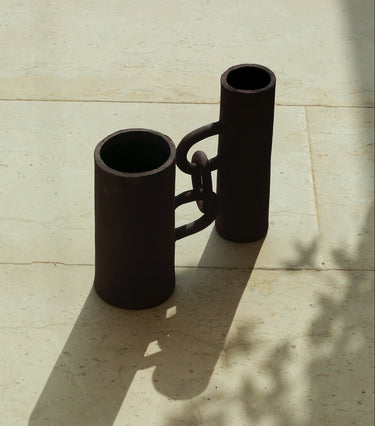
Photo @diane_moyssan @pepites_studio__
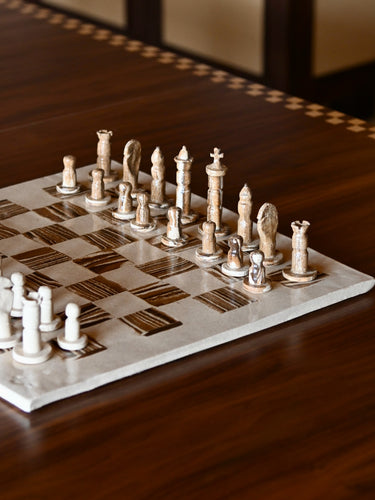
Photo @hotelprovencal

How do you envision the evolution of Franca Atelier in the coming years? On a creative level, but also in your way of working and developing your business.
Franca is intrinsically linked to both of our personalities in terms of image and brand identity, but in terms of pure production, Caroline could easily manage 90% of what we sell on her own. Our age difference means that, logically, France will retire first, and we're doing everything we can to ensure Caroline can continue the adventure independently. Our duo is the ambassador for Franca; the rest is simply a matter of organization to ensure that each of us continues to find the same joy in working the land.
If you had to draw a connection between your ceramic work and clothing, what would it be? In terms of the relationship to the material, to the handmade aspect, to the time involved in its creation…
Franca is a pair of jeans made from beautiful Japanese cotton denim without elastane. It has aged well, developed a patina, and has a few minor imperfections, but it fits us perfectly. We can wear it to the workshop or out for dinner and dancing in the evening. It's a pair of jeans for life. We hope our customers will cherish our creations for years to come, and that our Jules & Jim vase will be passed down through generations.
If your ceramic universe were to be translated into a fashion collection, what would it look like? Colour palette, materials, silhouettes, overall atmosphere.
A collection of timeless pieces with a touch of eccentricity, symbolizing Caroline's taste for classic elegance and France's slightly whimsical side. A somewhat androgynous wardrobe, well-tailored suits, long coats, ruffled shirts, cowboy boots, and hats. An overall understated feel with pops of vibrant color.